President Obama’s personal involvement in selecting the targets of covert drone strikes means he risks effectively handing a ‘loaded gun’ to Mitt Romney come November, says the co-author of a new report aimed at US policymakers.
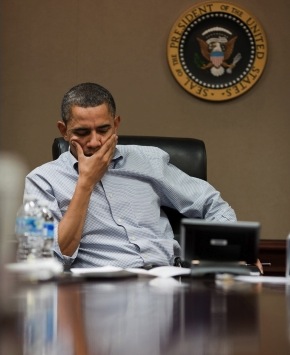 ‘If Obama leaves, he’s leaving a loaded gun: he’s set up a program where the greatest constraint is his personal prerogative. There’s no legal oversight, no courtroom that can make [the drone program] stop. A President Romney could vastly accelerate it,’ said Naureen Shah, associate director of the Counterterrorism and Human Rights Project at the Columbia Law School.
The president ‘personally approves every military target’ in Yemen and Somalia and around a third of targets in Pakistan, the report says. The remainder of strikes in Pakistan are decided by the CIA, so are even further from formal decision-making processes and public scrutiny.
‘We are asking President Obama to put something in writing, to disclose more, because he needs to set up the limitations of the program before someone else takes control,’ Shah told the Bureau.
In The Civilian Impact of Drones: Unexamined Costs, Unanswered Questions, experts from Columbia Law School and the Center for Civilians in Conflict examine the impact of the US ‘war on terror’ on the lives of civilian Pakistanis, Yemenis and Somalis caught in the crossfire. The report’s publication marks the anniversary of the assassination of US citizen Anwar al-Awlaki by a US drone in Yemen.
The report, which Shah said is ‘aimed squarely at policymakers’, calls on the Obama administration to justify its drone campaigns and their targets under international law. It also calls for a task force to examine what measures are in place to protect civilians.
‘The perception is that civilian casualties are not a problem. If you say otherwise, you’re accused of being naïve and being a pawn of al Qaeda… There’s an instinctual dismissal of reporting that shows there’s a casualty problem,’ said Shah.
Deep impact
The report examines how drone strikes have prompted retaliatory attacks from militants on those they believe are US spies, and stirred anti-US sentiment and violence among civilians in Pakistan and Yemen.
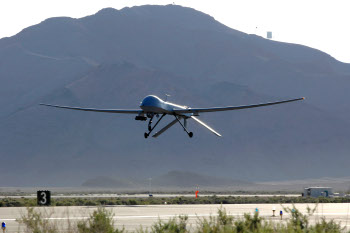 In the Waziristan region of Pakistan, the near-constant presence of drones exerts a terrible psychological toll on the civilian population, while the destruction of homes and other property is often catastrophic for Pakistani and Yemeni families.
In Somalia, many have been ‘forced to flee’ their homes in areas where al Qaeda-linked militants al Shabaab have their strongholds, to avoid drone and other air attacks.
And while the US claims only tiny numbers of civilians are killed by drones, establishing the truth of these claims is difficult. The report compares the Bureau’s estimates of drone deaths in Pakistan to similar projects by the Long War Journal, the New America Foundation and the Pakistan Institute of Peace Studies, noting that they ‘consistently point to significantly higher civilian casualties than those suggested by the US government’s statements’.
But deciding who is a militant and who is a civilian is fraught with difficulty – the very terms ‘civilian’ and ‘militant’ are ‘ambiguous, controversial, and susceptible to manipulation,’ the report says.
The US’s criteria for who is a civilian are ‘deeply problematic’, it adds. In May, a New York Times investigation revealed that all ‘military-aged males’ are held to be militants.
Spy agency turned covert military force
The CIA decides on the targets of Pakistan strikes – but next to nothing is known about its procedures for monitoring whether strikes kill civilians. To this day, the CIA has never officially acknowledged its campaign.
‘We know the US military has set up procedures for tracking and responding to civilian deaths because there’s so much public scrutiny… The CIA has no institutional history of complying with international law or setting up procedures for civilian deaths,’ said Shah. ‘It was a covert spy agency; it wasn’t set up for this. We don’t know how prepared they are to monitor civilian deaths or how concerned they are.’
The CIA is supposed to be accountable to Congress – but lawmakers are failing to scrutinize the impact of the CIA’s drone campaign on civilians, Shah said. Its watchdog role is compromised by the fact that the CIA has been ‘really careful to get political buy-in’, having come under intense criticism from Congress over allegations of torture under President Bush.
‘The strange thing about Congress is they think they are very well informed through briefings from the CIA… The CIA has got them to buy into the drone program, so there’s no incentive for them to criticize it. If they were to admit there was a problem, Congress would be on the hook as well,’ she continued.
Lawmakers should look beyond government sources for information on the impact of drone strikes, and scrutinize whether the CIA’s processes for protecting civilians and investigating the aftermath of strikes are up to the task, the report says.
The Obama administration is so in thrall to drones’ technological potential that alternatives are barely considered, Shah said.
‘For policymakers there’s a false sense of limited options: [there’s] a drones-only approach in the situation room… drones are becoming the only game in town and the other tools are being taken off the table. And there’s no thought that a non-lethal approach might have less impact on the community,’ she explained.
‘The focus is so much on the extent to which drones protect American lives that the impact on Pakistani or Somali lives is displaced. There’s so much trust placed in the technology that policymakers especially are failing to consider whether drone strikes are wreaking havoc on these communities.’
Columbia Law School’s Human Rights Institute will publish an additional detailed study of reporting of drone strikes – including an evaluation of the Bureau’s drone data in comparison to similar studies – in the next few weeks.
This article was originally published at The Bureau of Investigative Journalism.